Task management methods are the rules a person or team uses to decide what gets worked on, in what order, and how progress is made visible. Kanban, Scrum, Getting Things Done, the Eisenhower matrix and time-blocking are all task management methods. Trello, Jira, Asana and Notion are not — they are containers. A method decides how work flows through the container, and most teams that complain their tool "isn't working" have picked a tool without ever picking a method.
That distinction is the reason this guide exists. Teams of 10 to 500 people rarely fail at task management because they lack software. They fail because three people run the same board three different ways, because a backlog of 400 items has quietly become a graveyard, or because the work that recurs every week is being re-typed as a fresh task every Monday. Each of those is a method problem and no amount of switching apps fixes it.
This guide is written for the operations, IT, HR and team leads who have to make a method stick across a group of people with different habits. It covers the three major methods in enough depth to run them properly, four lighter techniques worth borrowing from, a comparison table, a decision guide for choosing between them, a six-step rollout plan, and the mistakes that usually undo the whole effort. By the end you should be able to name the method your team is using, say why, and explain which parts of your work do not belong in a task list at all.
Why the Method Matters More Than the App
Every task management tool ships with defaults: a list, a board, a due date field, an assignee field. The defaults are deliberately neutral so that any team can start using the tool in five minutes. That neutrality is also the trap. A tool with no method attached becomes a shared inbox that everyone dumps into and nobody empties.
The symptoms are familiar. Due dates are set optimistically and then ignored, so they stop meaning anything. Most items are marked "high" priority, so "high" stops meaning anything. The In Progress column holds 40 cards for a team of six, which means nothing is actually in progress — it is all in waiting. And the person who set the tool up is now the only one who understands the labels.
A method fixes this by answering questions the tool leaves open. How many things can one person work on at once? What has to be true before a task is allowed onto the board? Who decides order — the requester, the assignee, or a single backlog owner? When does the team stop and look at what it has finished? How do we tell a genuine one-off task from the twentieth run of a monthly process? Kanban, Scrum and GTD each give different answers, and the answers are what make a tool useful.
Tasks versus processes
Before comparing methods, it is worth separating two kinds of work that get lumped together on the same board. A task is a discrete piece of work with a definable end: write the Q3 board pack, fix the printer on the second floor, reply to the tender. It happens once. A process is a sequence of steps that repeats: onboarding every new starter, closing the books every month, patching servers every second Tuesday, publishing the social calendar every day. It happens again and again, the same way, and the value comes from consistency.
Task management methods are designed for tasks. When a process is forced into a task list, one of two things happens. Either someone re-creates the twelve steps of the process as twelve fresh tasks every time it runs — which is tedious, so they soon stop and write "do onboarding" as one task instead — or the steps are never written down at all and the process lives in one person's head. Neither gives the team a record of what was actually done. The right home for a repeating process is a workflow or a checklist that can be run as many times as needed, with each run tracked separately. We return to this split throughout the guide, because it is the single most useful thing an operations lead can learn about task management.
Rule of thumb
If you would have to create the same set of tasks again next week or next month, it is a process, not a task. Put the steps in a reusable checklist and run it; keep the task list for work that genuinely happens once.
Kanban: Columns, WIP Limits and Flow
Kanban started as a physical signalling system on the Toyota production line, where a card (the Japanese word kanban) travelling upstream told the previous station to produce more parts. The idea was pull rather than push: nothing is made until something downstream asks for it. David Anderson adapted the principle for software and knowledge work in the late 2000s, and the version most teams use today comes from that adaptation.
The visible part of Kanban is a board with columns representing stages of work — To Do, In Progress and Done at a minimum, with columns such as Awaiting Review or Blocked added as the team learns where work gets stuck. Cards move left to right, and anyone looking at the board can see what is being worked on, by whom, and where the queue is building. That visibility is only the first of Kanban's three mechanisms.
Work-in-progress limits
The second and most important mechanism is the WIP limit: a cap on the number of cards allowed in a column at any time. An In Progress column limited to four cards for a team of four means nobody is allowed to start a new card until one finishes. This feels restrictive for the first fortnight and then becomes the thing the team refuses to give up, because it forces two behaviours that never happen otherwise: people finish things before starting new ones, and blocked work gets unblocked quickly because it is visibly occupying a slot that someone else needs.
Setting the limit is a matter of experiment. A common starting point is one card per person in the column plus one, then tightening until the team feels the constraint. If the limit is never hit, it is too generous to change behaviour. If it is hit every hour, the column probably needs splitting into two stages so that the real bottleneck is exposed.
Flow metrics
The third mechanism is measurement. Because every card has a timestamp when it enters and leaves each column, Kanban gives a team four numbers that a to-do list never can:
- Lead time — how long a card takes from being requested to being done. This is what the customer or internal requester experiences.
- Cycle time — how long a card takes from being started to being done. This is what the team controls.
- Throughput — how many cards finish per week or per month.
- Work in progress — how many cards are started but unfinished at any moment.
These are connected by Little's Law, a queuing theory result that says average WIP equals average throughput multiplied by average lead time. In plain terms: if the team's throughput is fixed by its size, then the only way to shorten lead time is to reduce WIP. This is why the WIP limit is not a management preference but arithmetic. An IT support team that lets 60 tickets sit open with five engineers will have long lead times no matter how hard those engineers work; capping open tickets and finishing them in order will shorten the queue for everyone.
Worked example
A facilities team of three handles maintenance requests. Over a month they close 60 requests (throughput of 15 per week) and typically have 45 open at once. Little's Law gives an average lead time of three weeks. Capping open requests at 15 — by triaging the rest into a separate Not Started queue that does not count as WIP — brings the average lead time for started work down to about one week without hiring anyone. The queue is still there, but it is honest, and the requester can be told a real date.
Where Kanban fits
Kanban suits work that arrives continuously and unpredictably: support desks, facilities, marketing requests, legal reviews, any team that serves internal customers. It imposes no rhythm, so it is easy to adopt and easy to combine with other methods. That is also its weakness — with no fixed cadence, a team can drift without ever asking whether the right things are on the board, so schedule a fortnightly review of the metrics and the blocked column anyway.
Agile and Scrum: Backlogs, Sprints and Ceremonies
Agile is not a task management method. It is a set of values, written down in the 2001 Agile Manifesto by a group of software practitioners, that favours working increments over documents, collaboration over contracts, and responding to change over following a plan. Scrum is the most widely used framework that turns those values into a repeatable way of managing work, and when people say "we run Agile" they nearly always mean Scrum or something derived from it.
Scrum was formalised by Ken Schwaber and Jeff Sutherland and is defined in the Scrum Guide, a short document they still maintain. It was written for software teams, but its structure — a prioritised backlog, fixed-length iterations and a small number of mandatory meetings — has been adopted by marketing, HR, internal IT and operations groups with reasonable success.
The backlog
Everything the team might do lives in a single ordered list called the product backlog, and one person, the Product Owner, is responsible for its order. This is the part non-software teams most often skip and most often regret skipping. Without a single owner, the backlog becomes a wish list where every stakeholder's request sits at "top priority" and order is decided by whoever shouted most recently. With one, the team has one place to send requests and one person accountable for saying "not this sprint".
Sprints
Work is done in sprints: fixed periods, usually two weeks and never more than four, at the end of which the team delivers something finished. At the start of each sprint the team pulls items from the top of the backlog, committing only to what it believes it can complete, and nothing new is added mid-sprint except by agreement. The point of the fixed length is predictability, not speed. After three or four sprints a team knows roughly how much it can finish in a fortnight, and planning becomes arithmetic rather than hope.
The ceremonies
Scrum prescribes four events per sprint, and the discipline of actually holding them is what separates teams that get value from Scrum from teams that just have a board with a Sprint column:
- Sprint planning — the team selects what to commit to and agrees how it will be done. A structured sprint planning checklist keeps this to an hour or two rather than a half-day argument.
- Daily scrum — a 15-minute stand-up where each person says what they finished, what they will do next, and what is blocking them. It is a coordination meeting, not a status report to the manager.
- Sprint review — the team shows what it finished to stakeholders and gets feedback that reshapes the backlog.
- Sprint retrospective — the team looks at how it worked, not what it worked on, and picks one or two things to change next sprint.
The roles
Scrum names three roles. The Product Owner orders the backlog and is the single voice of what matters most. The Scrum Master owns the process — runs the ceremonies, removes impediments, protects the team from mid-sprint interruptions — and is explicitly not the team's manager. The Developers (the Scrum Guide's term; read it as "the people doing the work") self-organise to deliver the sprint commitment. Collapsing the first two roles into one person, or making the line manager the Scrum Master, are the two most common ways a Scrum adoption quietly turns back into command and control.
Where Scrum fits
Scrum suits project work with a defined goal that can be delivered in increments: a product build, a website migration, an office move, an ERP implementation, a quarterly campaign. It is a poor fit for interrupt-driven work, because the sprint commitment breaks every time an urgent ticket lands, and for repeating operational processes, because a monthly close does not benefit from being replanned into a sprint every time it happens.
Getting Things Done: Capture, Clarify, Organise, Reflect, Engage
Getting Things Done is a personal task management method described by David Allen in his 2001 book of the same name. Unlike Kanban and Scrum, GTD is not about a team's shared work; it is about how one person keeps every commitment they have made out of their head and in a trusted system, so that the head is free to think. Allen's core observation is that an unrecorded commitment keeps nagging at you whether or not you are in a position to act on it. Write it down somewhere you will definitely look, and the nagging stops.
GTD has five stages, and the method works only when all five are practised. Most people who "tried GTD and it didn't stick" did the first two and skipped the fourth.
Capture
Everything that has your attention — an email that needs a reply, a thought in the shower, a request from a colleague in the corridor — goes into an inbox the moment it occurs. Not a mental note. An inbox: a notes app, a paper pad, an email to yourself, a voice memo. The rule is that there are as few inboxes as possible and that they are all emptied regularly.
Clarify
Each captured item is processed with two questions. Is it actionable? If not, it is binned, filed as reference, or parked on a Someday/Maybe list. If it is actionable, what is the very next physical action? "Sort out the supplier contract" is not an action; "email Priya asking for the current contract PDF" is. Anything that will take less than two minutes is done immediately rather than recorded — Allen's two-minute rule — because recording it would take longer than doing it.
Organise
Clarified actions are sorted into lists by context (calls to make, things to do at the office, things to raise with a specific person) and multi-step outcomes are recorded as projects with their next action identified. Anything date-specific goes on the calendar and nowhere else. Anything waiting on someone else goes on a Waiting For list with the date it was delegated, which is the GTD feature most useful to managers.
Reflect
The weekly review is the stage that makes GTD hold together. Once a week, the practitioner empties every inbox, reviews every project to confirm it has a next action, checks the Waiting For list for things to chase, and looks at the calendar for the fortnight ahead. It takes an hour. Skip it for three weeks and the system is no longer trusted, at which point the head starts holding commitments again and the method has failed.
Engage
With everything captured and organised, choosing what to do in a given moment becomes a matter of context, time available, energy available and priority — in that order. GTD deliberately puts priority last: the highest-priority item is irrelevant if you are on a train without a laptop and it needs a spreadsheet.
Where GTD fits
GTD is the strongest of the three methods for an individual with a high volume of small, varied commitments: a manager, an account handler, an IT lead fielding requests from every department. It is weak as a team method because it has no shared view and says nothing about capacity — a GTD practitioner can have a perfectly organised system containing three times more work than they can do. Pairing it with a team-level Kanban board, so that shared work is visible and capped, addresses both gaps.
Four More Techniques Worth Borrowing
The three big methods are complete systems. The following techniques are narrower, but each solves a specific problem well and each can be dropped into any of the three without conflict.
The Eisenhower matrix
Popularised by Stephen Covey and named after a remark attributed to Dwight Eisenhower, the matrix sorts tasks on two axes — urgent or not, important or not — into four quadrants. Urgent and important gets done now. Important but not urgent gets scheduled; this is the quadrant the matrix exists to protect, because planning, process improvement and training live there and it is what disappears when a team is constantly firefighting. Urgent but not important gets delegated. Neither gets dropped. The matrix is a triage tool, not a system; use it when a backlog has become unmanageable and you need a fast, defensible way to cut it.
Time-blocking
Time-blocking moves tasks from a list onto the calendar as appointments with yourself. Its advantage over a list is that it confronts capacity honestly: a list can hold 30 items, but a Tuesday can hold about six hours of focused work, and blocking makes the gap visible before the week starts rather than at the end of it. It pairs naturally with GTD and with Scrum. Its weakness is fragility — one urgent interruption knocks every subsequent block along, so blocks need slack around them.
Pomodoro
Francesco Cirillo's technique from the late 1980s: work for 25 minutes on one task with no interruptions, take a five-minute break, repeat, and take a longer break after four rounds. It is a focus technique rather than a planning one, and it works because it makes starting cheap — anyone can commit to 25 minutes. It is unsuited to work that needs long uninterrupted stretches, and it should never be imposed on a team by a manager; it is a personal tool.
Checklists as a method
A checklist is the oldest task management technique of all, and it is the right method for a class of work that the other methods handle badly: the repeating process. Atul Gawande's account of the WHO Surgical Safety Checklist showed that a short, well-designed checklist run by already-expert surgical teams cut deaths and complications substantially across hospitals in eight countries. The checklist did not tell the surgeons anything they did not know. It made sure that what they knew was done every time, under pressure, by whoever was in the room.
That is exactly the property an operations team needs for onboarding, close, patching, audits and handovers — and exactly the property a task list cannot provide, because a task list has no memory of how the work was done last time. A checklist that is designed well, assigned to named people and run on a schedule is a task management method in its own right. The guide to creating checklists that actually get used covers the design side; the rest of this article covers how to combine checklists with the flow methods above.
Start With a Ready-Made Checklist
CheckFlow's template library includes sprint planning, sprint review, daily operations and onboarding checklists you can run as-is or adapt in minutes.
Browse Free TemplatesTask Management Methods Compared
The table below puts the methods side by side on the questions that matter when choosing one for a team. "Tooling" describes what the method needs at minimum, not what vendors will sell you.
| Method | Best for | Team size | Cadence | Tooling | Main weakness |
|---|---|---|---|---|---|
| Kanban | Continuous, interrupt-driven work: support, facilities, requests | 1 to ~15 per board | None fixed; continuous flow with periodic review | A board with columns and WIP limits; timestamps for metrics | No built-in rhythm for stepping back; drifts without a review habit |
| Scrum | Project work with a goal that can be delivered in increments | 3 to 9 per team | Fixed sprints of 1–4 weeks with four set events | Ordered backlog, sprint board, somewhere to record retrospective actions | Breaks under constant interruptions; heavy for small or operational teams |
| GTD | Individuals with many small, varied commitments | 1 | Daily capture and processing; weekly review | Inbox, next-action lists, calendar, Waiting For list | No shared view and no capacity limit; fails without the weekly review |
| Eisenhower matrix | Triaging an overloaded list quickly | 1 to small team | As needed | Pen and paper | A sorting tool, not a system; everything feels urgent under pressure |
| Time-blocking | Protecting focused work and confronting capacity | 1 | Daily or weekly planning | Calendar | Fragile under interruptions; needs slack built in |
| Pomodoro | Starting and sustaining focus on one task | 1 | 25-minute intervals | Timer | Wrong for deep work needing long stretches; not a planning method |
| Checklists | Repeating processes that must be done the same way each time | 1 to whole organisation | Per run: daily, weekly, monthly or triggered by an event | Reusable template, assignment, completion record | Useless for one-off work; stale if nobody owns the template |
How to Choose a Task Management Method
Most teams choose a method because someone on the team used it at a previous employer. That is not a bad reason, but it is a weak one when the previous employer was a 40-person software company and the current team is an HR department of six. The better route is to characterise the work first and let the method follow. Four questions do most of the work.
Does the work arrive continuously or in projects?
If requests turn up every day from people outside the team and each one is different, that is flow work and Kanban is the natural fit. If the team is delivering something with a defined end state over weeks or months, that is project work and Scrum's sprint rhythm gives stakeholders the checkpoints they want. Many teams have both — an IT team with a helpdesk and a migration project — and should run them separately rather than forcing one method over both.
How much of it repeats?
Walk through last month's completed work and mark each item as one-off or repeating. Operations, HR, finance and IT teams are routinely surprised to find that half or more of what they did was the same process running again. That half belongs in checklists, not in the task method, and moving it out is usually the biggest single improvement available. It shrinks the task board to work that actually needs deciding about and gives the repeating work a record that a task board never produces. The guide to process standardisation explains how to identify and document that repeating half.
Who needs to see it?
If the only person who needs to see the work is the person doing it, GTD or time-blocking is enough. If the team needs to coordinate, a shared board is required and the choice is between Kanban and Scrum. If a manager or a client needs to see progress on repeating processes without asking, a checklist platform with a dashboard is required, because boards show cards, not completed steps.
How much ceremony will the team tolerate?
Scrum demands four meetings per sprint and a named backlog owner, and works badly when those are skipped. Kanban asks only for a board and a WIP limit. A team new to any method should usually start with Kanban, build the habit of finishing before starting, and add cadence later if project work needs it. Starting with full Scrum in a team that has never had a shared board tends to produce ceremonies without the behaviour they are meant to create.
A quick decision guide
- Support desk, facilities, marketing requests, legal review, anything interrupt-driven: Kanban with WIP limits.
- A project with a goal, a deadline and stakeholders who want regular visibility: Scrum, with a real Product Owner.
- One busy person juggling many small commitments: GTD, with the weekly review protected in the calendar.
- Repeating operational processes — onboarding, close, patching, audits, daily opening and closing: checklists, run on a schedule and assigned by name.
- A team doing all of the above: Kanban for the flow work, checklists for the repeating work, and a personal method of each person's choosing underneath.
Combining Methods: Kanban for Flow, Checklists for Repeatable Work
The methods are not rivals, and the teams that manage work best almost always run more than one. The combinations below are the ones that recur in well-run operations, IT and HR teams.
Kanban plus checklists
This is the most useful pairing for an operations team. The Kanban board holds the one-off and variable work: incoming requests, improvement tasks, escalations. The repeating processes run as checklists on their own schedule, each run assigned to a named person, with a dashboard that shows which runs are in progress, which are overdue and which steps are stuck. The board is small and honest because it no longer contains 30 copies of "run monthly report", and the checklists produce the audit trail the board never could. A card can link to a checklist run when a request kicks off a standard process, so the two systems reference each other rather than duplicating.
Scrum plus checklists
Scrum's own events are repeating processes, and running them from a checklist is the easiest way to keep them consistent when the Scrum Master is on holiday or the team is new. A sprint planning checklist ensures the backlog was refined, capacity calculated and the sprint goal written down before anyone pulls a card; a sprint review checklist ensures the demo was prepared, stakeholders invited and feedback captured back into the backlog. The Definition of Done most Scrum teams keep is, in effect, a short checklist applied to every item before it moves to Done.
Scrumban
Teams that start with Scrum and find the sprint commitment keeps breaking under interruptions often move to what is loosely called Scrumban: a Kanban board with WIP limits for day-to-day flow, keeping Scrum's fortnightly planning and retrospective without the fixed commitment. It is a sensible destination for internal IT and platform teams, and for any group whose work is roughly half project and half interrupt.
GTD underneath everything
Whatever the team runs, each individual still has to manage their own share of it alongside the emails, corridor requests and personal admin that never reach a shared board. GTD, or a simplified version of it, is the right layer for that. The team method decides what the team works on; the personal method decides what this person does in the next hour. Keeping the two separate stops the shared board filling up with "remember to call the dentist".
A worked example: a 40-person managed services team
Reactive tickets run on a Kanban board with a WIP limit per engineer. Client onboarding, monthly patch cycles and quarterly access reviews run as recurring checklists, each run assigned to the account team for that client. Project work — a client migration, an internal tooling rebuild — runs in two-week sprints on a separate board. Each engineer keeps a personal next-action list. The service manager looks at one dashboard for the checklists, one board for tickets and one for projects, and the three never contaminate each other.
Rolling Out a Task Management Method to a Team
Choosing a method takes an afternoon. Getting eight people to use it the same way for six months is the actual work. The following six steps are the ones that separate rollouts that stick from rollouts that become another abandoned board.
Audit what the team actually does
Before touching a tool, list everything the team completed in the last four to six weeks, pulled from email, the old tool, meeting notes and memory. Tag each item as one-off, project or repeating process, and note who did it. This inventory tells you which method fits the majority of the work, and it usually reveals that a third or more of the team's effort goes into repeating processes nobody has written down. Those become the first checklists.
Pick one method for the shared work and write down the rules
Choose Kanban or Scrum for the team board using the decision guide above, and write a one-page working agreement: what the columns mean, what the WIP limits are, what has to be true before a card is allowed on the board (a clear title, an owner, a definition of done), who orders the backlog and when the team reviews the board. One page. Pin it to the board. Rules that live only in the head of the person who set the board up are not rules.
Move the repeating processes out into checklists
Take the repeating processes from the audit and build each as a reusable checklist with steps, named assignees and a schedule or trigger. Start with the two or three that hurt most — the ones done inconsistently or forgotten last quarter. A team that ships three good checklists in the first month is ahead of a team that plans twenty. The board immediately gets smaller, which is the first visible win of the rollout.
Set WIP limits and capacity deliberately
Whatever the method, decide how much the team can have in flight. For Kanban, set the column limits and enforce them from day one; for Scrum, calculate real capacity for the first sprint by subtracting leave, meetings and support duty from the calendar rather than assuming ten working days per person. Teams that skip this step end up with the same overload they had before, now displayed on a nicer board.
Run it for six weeks before changing anything
The first fortnight of any method feels wrong: the WIP limit is annoying, the stand-up feels like surveillance, the checklist seems to have too many steps. Most of that feeling is the method doing its job. Agree in advance that the team will run the method as written for six weeks (three sprints, for Scrum) and log friction rather than acting on it immediately. This stops the rules being renegotiated every time someone is inconvenienced, which is how most boards decay.
Review the metrics and adjust
At the six-week mark, look at the numbers — cycle time, throughput, sprint completion rate, checklist runs completed on time — and the friction log together. Change one or two things: split a column, adjust a limit, remove a checklist step that nobody thinks adds value, add a step that was missed twice. Then run for another six weeks. A method that is reviewed on a fixed cadence keeps improving; one that is tweaked continuously never settles enough to be judged.
Common Task Management Mistakes
The same handful of mistakes account for most failed adoptions. They are worth naming because they look like reasonable decisions at the time.
Mistake: choosing the tool before the method. The team buys a licence, imports everything into it and only then discovers that nobody agrees on what In Progress means. The fix is the one-page working agreement from step two of the rollout. Write it before configuring anything. Any tool can support any of the methods above; the method is the decision, the tool is the consequence.
Mistake: no WIP limit. A Kanban board without a limit is just a list arranged horizontally. Everyone starts everything, nothing finishes, and the board becomes a record of good intentions. Set a limit that will actually be hit, and treat hitting it as a signal to swarm on finishing rather than as a rule to work around.
Mistake: putting repeating processes on the task board. "Onboard Sam", "Run October close" and "Patch the servers" appear as single cards, which means the fifteen steps inside each one are invisible, unassignable and unrecorded. When something is missed, there is no way to see which step it was. Move these into reusable checklists with steps, named assignees and a completion record, and keep the board for work that happens once.
Mistake: turning the stand-up into a status report. When the daily meeting becomes each person reporting to the manager, it takes 40 minutes, people prepare defensively, and the coordination it was meant to provide disappears. The stand-up is for the team to synchronise with each other. If a manager needs status, a board or a dashboard gives it without a meeting — the alternative to micromanagement is visibility built into the system, not more check-ins.
Mistake: a backlog nobody owns. A backlog of several hundred items with no owner is a graveyard, and everyone knows it. Give it one owner with the authority to say no, review it monthly, and delete anything that has sat untouched for two quarters. A short backlog that the team believes is real is worth more than a long one that captures every request ever made.
Personal vs Team Task Management
A great deal of confusion about task management methods comes from applying a personal method to a team, or a team method to a person. They solve different problems and need different tools.
Personal task management is about one person's attention. Its goals are to never forget a commitment, to choose well what to do next, and to protect enough focused time to do it. GTD, time-blocking, Pomodoro and the Eisenhower matrix are all personal methods. The tool can be anything from a notebook to a dedicated app, and it can be private; nobody else needs to read it. The most common mistake is expecting a personal system to also be the team's system, which produces one person with a beautifully organised view of work that nobody else can see.
Team task management is about coordination and capacity. Its goals are that everyone can see what is being worked on, that the team does not start more than it can finish, that priorities are set once rather than argued daily, and that a manager or stakeholder can see progress without interrupting anyone. Kanban and Scrum are team methods. The tool has to be shared, and the discipline has to be collective — a WIP limit that half the team ignores is not a WIP limit.
Process management is a third layer that sits above both, and it is the one most guides to task management leave out. Its goal is that repeating work is done the same way every time, by whoever does it, with a record. Checklists and workflows are its methods, and the tool has to support reuse, assignment and history. A team that has good personal and team task management but no process layer will still onboard people inconsistently and still forget the quarterly review, because those are not tasks. A 90-day onboarding plan, for instance, is forty or fifty steps spread over three months across three or four owners; no card on a board can carry that.
The practical implication for a team lead is to be explicit about which layer a given tool or ritual belongs to. The shared board is the team layer: keep personal reminders off it. The checklist platform is the process layer: keep one-off tasks out of it. Each person's own list is theirs, and the lead's job there is to make sure people have one, not to inspect it.
What to Measure
A method that is not measured cannot be improved, but the wrong measures damage the behaviour they are meant to encourage. The useful metrics differ by layer.
For flow work (Kanban)
Track cycle time, throughput and WIP, and look at the distribution rather than the average — a support team whose median ticket closes in two days but whose slowest 15% take three weeks has a specific, findable problem in that tail. Count how often the WIP limit is hit and how long cards spend in Blocked. Do not track individual throughput as a performance measure; once cards-per-person is a target, people pick small cards and stop swarming on hard ones.
For project work (Scrum)
Track sprint completion rate (planned versus delivered), velocity trend over several sprints, and how much work was added mid-sprint. A team that consistently delivers 60% of what it plans is over-committing, not under-performing, and the fix is at planning. Velocity is useful for the team's own forecasting and harmful as a comparison between teams or as a target.
For repeating processes (checklists)
Track the proportion of runs completed on time, average time to complete a run, which steps are most often late or skipped, and which assignees have overdue steps. These are the metrics a task board cannot give you and the ones an auditor, a client or a director actually asks about: was the onboarding finished before the start date, was the close done by working day five, has every server been patched this cycle. A platform with an analytics and reporting view across all runs turns those questions into a glance rather than an investigation.
For individuals
Measure as little as possible. The honest signals that a person's system is working are that commitments are not being forgotten, that Waiting For items are being chased, and that the person can say what they are doing tomorrow. None of those need a dashboard, and turning personal task management into a reported metric reliably makes it worse.
Free Task Management Templates
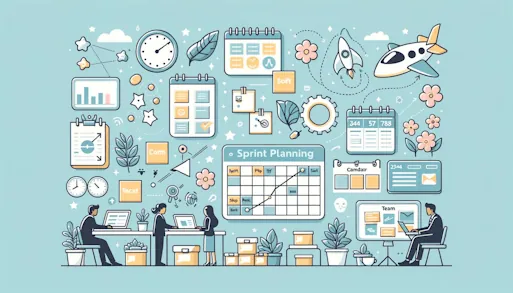
The fastest way to move a repeating process off the task board is to start from a checklist that already has the steps. The three below cover the Scrum ceremonies most teams struggle to keep consistent and a daily operational routine of the kind that should never be a to-do item. Each opens as a template you can run immediately or edit in the template designer; the full library is at checkflow.io/templates.
How CheckFlow Fits
CheckFlow is built for the process layer described throughout this guide: the repeating work that belongs in checklists rather than on a task board. It does not replace a Kanban board or a sprint tool for one-off and project work — it takes the repeating half of the team's effort off that board and gives it the structure a task list cannot.
Every process starts as a template with steps, assignees and required fields, built in the template designer or picked from the library. From the template, runs are started by hand, on a recurring schedule (daily opening checks, a weekly report, the monthly close, a quarterly review) or by an event such as a new starter being added. Each step is assigned to a named person or role, so "the team" is never the owner of anything, and dynamic due dates are calculated from the run's start date or from the completion of an earlier step, so a checklist that starts on a Thursday has its deadlines shifted accordingly without anyone editing them.
Conditional logic shows or hides steps based on earlier answers, so one template can handle a contractor and a permanent employee, or a critical and a routine patch, without maintaining separate versions — the guide to conditional logic in checklists covers the patterns. For genuinely one-off work that does not warrant a template, CheckFlow also supports standalone tasks that can be assigned and tracked alongside checklist runs, so the team is not forced to keep a second tool for the odd item.
The real-time dashboard shows every active run, its assignee, its progress and anything overdue, which is what replaces the status-report stand-up and the "did you do that yet?" message. Every completed step is recorded with who did it and when, producing an audit trail per run that a task board never generates. And the Zapier integration and API let a card on your task board, a ticket in your helpdesk or a record in your HR system start a checklist run automatically, so the flow layer and the process layer talk to each other rather than being retyped.
CheckFlow's checklist software starts from $10 per user per month, with a 14-day free trial and no credit card required. You can see what live runs look like on the checklists page, and if you are comparing options the roundup of the best checklist apps sets out where CheckFlow sits against lighter personal tools.
Take the Repeating Work Off Your Task Board
Keep Kanban or Scrum for the one-off work. Run onboarding, close, patching and every other repeating process as an assigned, scheduled, tracked checklist in CheckFlow.
Start Your Free TrialFrequently Asked Questions
What are the main task management methods?
The three most widely used complete methods are Kanban (a visual board with columns and work-in-progress limits, suited to continuous flow work), Scrum (the most common Agile framework, using an ordered backlog and fixed-length sprints for project work) and Getting Things Done (David Allen's personal system of capturing, clarifying, organising, reviewing and acting on commitments).
Narrower techniques that fit inside any of them include the Eisenhower matrix for triage, time-blocking for protecting focused work, Pomodoro for sustaining attention, and checklists for repeating processes that must be done the same way every time. Most teams end up combining a team method with a personal one and a checklist layer for their recurring work.
What is the difference between Kanban and Scrum?
Kanban is a continuous-flow method: work is pulled onto a board as capacity frees up, limited by work-in-progress caps, with no fixed iteration. Scrum is an iterative method: the team commits to a batch of work for a fixed sprint of one to four weeks, delivers it, reviews it with stakeholders and plans the next batch. Kanban has no prescribed roles or meetings; Scrum prescribes three roles and four events per sprint.
Kanban suits interrupt-driven work such as support and internal requests, where a sprint commitment would be broken daily. Scrum suits project work with a defined goal where stakeholders benefit from a regular rhythm of review. Many teams run Kanban for their operational work and Scrum for their projects, on separate boards.
Is the GTD method still worth using?
Yes, for the problem it was designed for: one person with a high volume of varied commitments who needs to stop holding them in their head. The five stages — capture, clarify, organise, reflect, engage — are as sound as they were when the book was published, and the two-minute rule and the Waiting For list are used by managers who have never heard of GTD.
Its limits are that it is a personal method with no shared view and no notion of capacity, and that it collapses if the weekly review is skipped. Use it underneath a team method such as Kanban rather than instead of one, and simplify it if the full system feels heavy: one inbox, next-action lists, a calendar and a weekly review is enough for most people.
Which task management method is best for small teams?
For most teams under ten people, Kanban is the safest starting point. It needs only a shared board and a work-in-progress limit, it copes with the mix of project and interrupt work that small teams always have, and it builds the one habit that matters most — finishing before starting — without the meeting overhead of Scrum. Add a fortnightly review so the team steps back and looks at the board.
Whatever the board method, small teams should move their repeating processes into checklists early. In a team of six, a single person forgetting a step of onboarding or month-end has a large effect, and a checklist with named assignees and a completion record is the cheapest protection against it.
Can you combine Kanban and GTD?
They combine well because they operate at different levels. Kanban is a team method that decides what the group is working on and limits how much is in flight. GTD is a personal method that decides what an individual does next, given everything on their plate including the things that never reach a shared board. A person can pull a card from the team's Kanban board and manage its next actions in their own GTD lists.
The one rule is to keep the layers separate. Personal reminders and admin should not appear on the team board, and the team's cards should not be duplicated in full in personal lists — a reference to the card is enough. Some people run a personal Kanban board instead of GTD lists, which works equally well.
What is a WIP limit and why does it matter?
A work-in-progress limit is a cap on how many items can be in a given stage of work at once — for example, no more than four cards in the In Progress column for a team of four. When the limit is reached, nobody starts anything new until something finishes. It is the mechanism that turns a Kanban board from a horizontal to-do list into a flow system.
It matters because of Little's Law: for a team with fixed throughput, lead time is proportional to work in progress. Halving the amount of work in flight roughly halves how long each item takes to get through, without anyone working faster. It also exposes blockers quickly, because a blocked card is visibly occupying a slot someone else needs.
Should recurring work go on a task board or in a checklist?
In a checklist. A task board treats each card as a single unit of work, so a repeating process such as employee onboarding or month-end close either becomes one opaque card ("run close") with its steps hidden, or fifteen cards that someone has to recreate every cycle. Neither gives you a record of which steps were done, by whom, or which were missed.
A reusable checklist keeps the steps in one template, runs it on a schedule or trigger, assigns each step to a named person and records completion per run. The board then holds only the one-off work, which makes it smaller and more honest, and the checklist runs give you the audit trail and on-time metrics that operational and compliance work needs.