
Checklist software for teams that can’t afford a missed step.
Build a process once, run it as often as you need, and know on every run who owns each step, when it is due and whether it was done. For business teams in IT, HR, MSP, operations and compliance.
14-day free trialNo credit cardUnlimited free guests
Last updated
Checklist software, also called checklist management software, turns a repeatable process into a digital checklist people run, rather than a document they are meant to read. You build a template once. Each time the process starts, CheckFlow creates a new checklist, assigns every step, sets due dates, sends reminders and records who completed what, and when. Businesses use it for IT, HR, MSP, operations and compliance processes that run every week, from $10 per user per month.
What changes when the checklist runs the process.
Every step has an owner
A person, a group, or whoever is named when the run starts. Nobody has to wonder whose job it is.
Deadlines chase themselves
Relative due dates and reminder rules replace the follow-up email and the spreadsheet of who is late.
Proof on every run
A name and a time on every step and field, so a manager can see who missed what and an auditor can see what was done.
The basics
What checklist software does
A checklist in a spreadsheet or a shared document tells people what should happen. Checklist software tells you what did happen, on every run, without anyone chasing for updates.
You build the checklist once as a template. Each time the process starts, such as a new hire, a new client, a month-end close or a server patch, the software creates a fresh checklist, gives every step to the right person, works out the due dates, sends the reminders and records each completion.
- Runs one template many times, each run tracked separately
- Gives every step an owner: a person, a group or a role
- Works out deadlines from a start date or from other steps
- Shows only the steps that apply to this run
- Keeps the evidence: a name and a time on every step
Comparison
Checklist software vs spreadsheets, documents and project tools
Most teams already have a checklist somewhere: a tab in a spreadsheet, a page in the wiki, a task template in the project tool. Each can hold a list. The question is what happens on the fiftieth run, with three people involved and a deadline that depends on someone else finishing first.
| What the process needs | Spreadsheet | Shared document | Project management tool | Checklist software |
|---|---|---|---|---|
| Run the same process many times | Copy the file each time | Copy the file each time | Duplicate a project or task template | Run the template as often as needed, each run tracked separately |
| An owner for every step | A name typed in a column | Not built in | Yes, per task | Yes, per step: a person, a group, or a role chosen when the run starts |
| Due dates relative to a start date | Formulas kept up by hand | No | Depends on the tool | Yes, from the start date, a date field or other steps |
| Show only the steps that apply | No | No | Rarely | Yes, conditional logic on whole tasks and single fields |
| Enforce order and approvals | No | No | Task dependencies in some tools | Yes, later steps stay locked until earlier ones are done |
| Reminders and overdue alerts | No | No | Generic due-date reminders | Rules per step: due in, overdue by, completed, status changed |
| Start on a recurring schedule | No | No | Recurring tasks, rarely whole processes | Yes, the whole checklist, with tasks assigned and dates set |
| Capture data inside each step | Cells | Free text | Custom fields, usually per task | 19 control types inside each step, from dates and drop-downs to file uploads and tables |
| Record of who did what, and when | Edit history, if switched on | Version history | Activity per task | Name and time on every step and field, in an activity feed |
| Best suited to | One-off lists and analysis | Policies and reference material | Projects that differ each time | Processes that must run the same way every time |
None of these is the wrong tool. Keep the SOP document as the reference that explains why a process works the way it does, and keep the project tool for one-off projects with a start and a finish. Checklist software covers the ground in between: the process that runs every week, for every hire or for every client, and has to be done the same way each time.
Weighing CheckFlow against a specific product? Our CheckFlow comparisons set out the differences in features and pricing, and our round-up of the best checklist apps for teams covers the wider market, including where other tools fit better.
Not ready to move yet? Our guides show how to make a checklist in Excel, Google Sheets, Word, Microsoft Teams, OneNote and Notion, and the point where each one stops fitting a team process.
Who it is for
Checklist software for every team
The same building blocks, templates, owners, due dates, logic and a record of every step, cover very different processes. These are the teams that rely on them most. Each card links to a page on that use case, or start from one of the ready-made checklist templates.
IT and engineering
User onboarding and offboarding, access reviews, patching, change, release and incident checklists. Each system goes to its owner, and every account created or revoked is on record.
IT onboarding checklist softwareHR
Onboarding, offboarding, probation reviews and policy sign-offs. One checklist per starter, and HR, IT, finance and the line manager each see their own steps.
HR checklist softwareOperations
Opening and closing routines, quality checks, supplier onboarding and shift hand-overs. Standard operating procedures become checklists people follow while they work.
Standard operating procedure softwareCompliance and audit
ISO 27001, SOC 2 and GDPR control checks, internal audits and policy reviews. Schedules keep reviews on time, and the completion record is the evidence an auditor asks for.
Compliance checklist softwareManaged service providers
Client onboarding, scheduled maintenance and offboarding across every client. One standard everywhere, with parameters for the details that change per client.
MSP process management softwareFinance
Month-end and year-end close, payroll runs, reconciliations and payment approvals. The checklist starts itself each period, and a halt holds the payment step until the approval is signed off.
Recurring checklist software
Starting a run
From template to live checklist in one step
Starting a checklist takes seconds. Pick the template and fill in the details it asks for, here the new starter’s name, start date and HR representative, and CheckFlow creates the checklist with every task assigned and every due date worked out from that start date.
Those opening values are parameters. They can decide who gets which task, pre-fill fields and switch conditional steps on or off, so one template covers every variation of a process instead of one template per variation. Build and change templates in the template designer.
Buyer’s guide
How to choose checklist software: eight things to test
Most checklist tools look alike in a demo: a list, some tick boxes, a progress bar. The differences show up months later, when a process has run dozens of times and someone asks who signed off step six in March. Test these eight points in your trial with a real process, not a sample.
- 01
Recurring schedules
Can a whole checklist start itself, every weekday or on the last weekday of the quarter, with tasks assigned and dates set? A repeating to-do inside one list is not the same.
In CheckFlow: schedules create each checklist in their own time zone, daily to yearly or on fixed month and quarter points.
- 02
Conditional logic
Real processes branch. Without logic you maintain near-identical templates or ask people to skip steps, which is how important ones get skipped too.
In CheckFlow: If and Then rules show or hide tasks and single fields. See conditional logic in checklists.
- 03
Assignment
Every step needs an owner who is not picked by hand on every run. Look for people, groups and roles, assignment at the start of the run, and assignee-only completion.
In CheckFlow: users, groups, parameters and Members fields, with notifications by email or Slack.
- 04
Due dates
Fixed dates do not survive a repeatable process. Deadlines should be relative, such as seven days before the start date, and move when the date moves.
In CheckFlow: offsets from the start, other tasks, date fields or parameters, or calendar positions.
- 05
Audit trail
If the checklist exists because of an auditor, a client contract or a regulator, the record matters as much as the work.
In CheckFlow: a name and a time on every step and field, an activity feed, print or save as PDF, data exports, and version history on every template.
- 06
Integrations
Checklists usually start because something happened elsewhere: a deal closed, a ticket was raised, a form came in. Check how a run starts from another system.
In CheckFlow: Zapier, a REST API, webhooks, run links and an MCP server for AI assistants, on every plan.
- 07
Pricing model
Per user, per checklist, per run or per feature tier? Caps on runs penalise you for using the tool as intended. Ask whether people who only complete tasks need a paid seat.
In CheckFlow: $10 per user per month, unlimited checklists and templates, and free, unlimited guests. See pricing.
- 08
Mobile access
Where will the steps be done? At a desk a browser is enough. On a warehouse floor or a client site, test on the phone your team carries, with the signal they get.
In CheckFlow: a web app that works in mobile browsers and can take photos for File Upload fields. There is no native app and no offline mode.
Checklist software that works with your AI.
AI builds the template and your assistant can work the checklist, while every step stays assigned to a person and on the record.
Free AI checklist generator
Describe a process in a sentence and get a template with sections, fields, conditional steps and due dates. No account needed to try it.
Try the AI generatorImport the procedure you already have
Inside CheckFlow, the generator reads Word, Excel, PDF, CSV and web pages, or a photo of a paper checklist, and turns it into a template you can edit.
See the template designerMCP server, on every plan
Connect Claude, ChatGPT, Gemini, Grok, Copilot or any other AI assistant. With 147 tools, your assistant can start checklists, work the Tasks Grid, complete or reassign tasks and update Data Sets, acting as the person its API key belongs to.
Read the MCP guide
Start client onboarding for Northwind Traders. Kick-off is Tuesday 13 October.
template: "Client Onboarding"
name:     "Client Onboarding – Northwind Traders"
kick_off: "2026-10-13"
Started "Client Onboarding – Northwind Traders" with 18 tasks. Dana has the welcome pack, due Wednesday 14 October. Shall I share the client’s steps by link?
Ready-made checklists to start from.
Every template opens as a working checklist. Adapt it, then run it with your team.
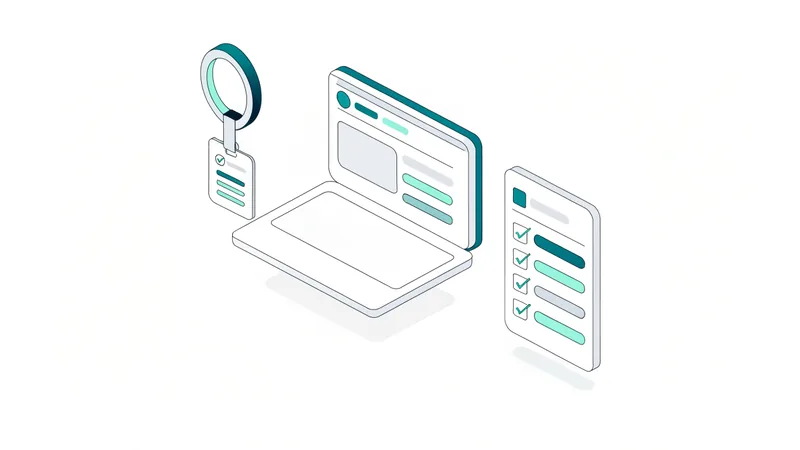
Employee Onboarding Checklist
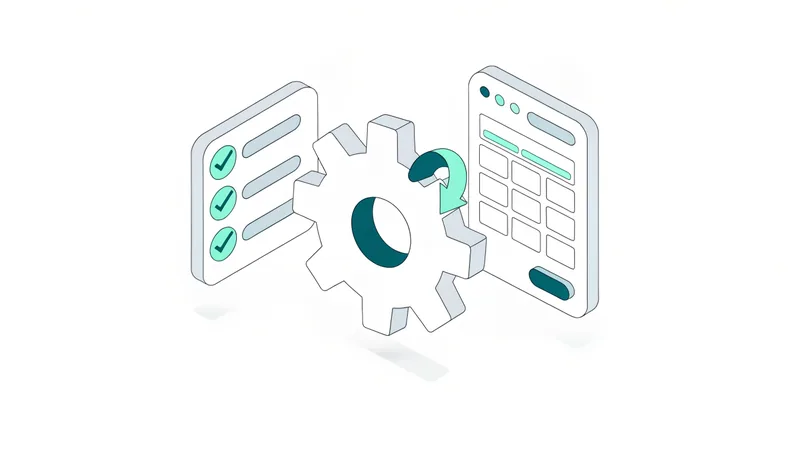
IT Change Management Process Checklist
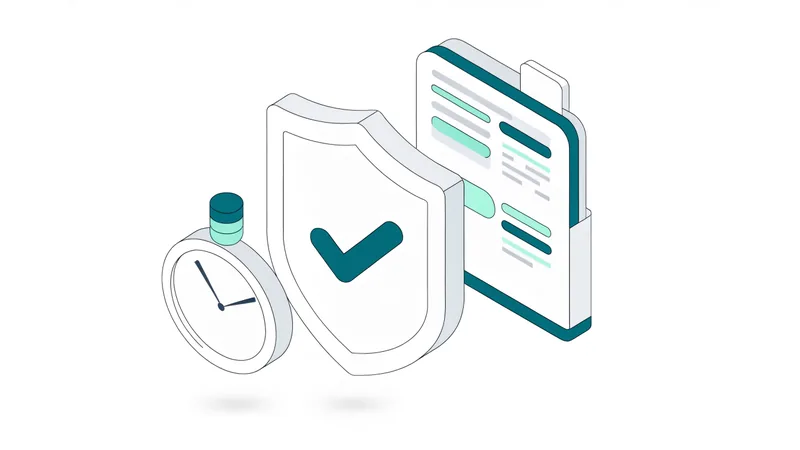
SOC 2 Readiness Checklist
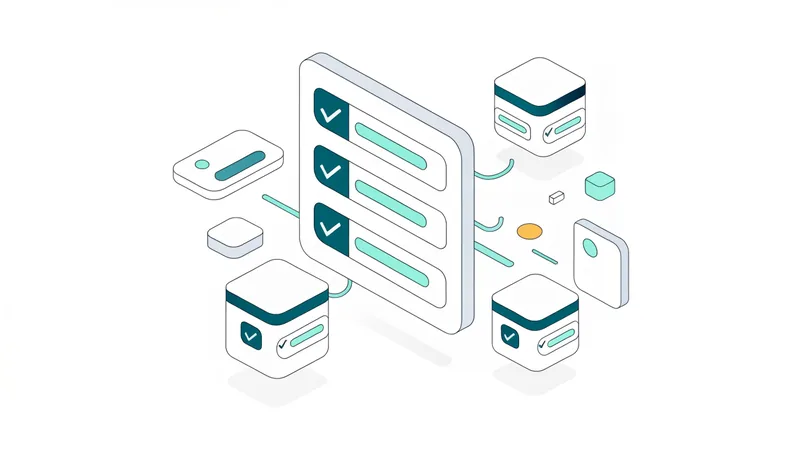
MSP Client Onboarding Checklist
Monthly Bookkeeping Checklist

Marketing Agency Client Onboarding Checklist
Inside CheckFlow
Checklist software questions
What is checklist software?
Checklist software is a tool for creating, running and tracking checklists as live processes rather than static documents. Unlike a checklist in a spreadsheet, it assigns each task to a specific person, tracks whether each item has been completed, sends reminders for overdue steps and records who completed what and when. That makes it the better fit for any process that runs repeatedly and needs accountability.
What is the best checklist software for teams?
It depends on the process. For team processes that repeat, look for templates you can run many times, an owner for every step, relative due dates, conditional logic, recurring schedules and a timestamped record of every step. That is the case CheckFlow is built for. Our guide to the best checklist apps compares the main options, including where other tools fit better.
Is there free checklist software, and is it good enough?
Spreadsheets, shared documents and the free tiers of task apps can all hold a checklist, and for a personal list they are fine. They tend to run out on the team side: assigning each step, reminding people automatically, running on a schedule and proving afterwards that the work was done. CheckFlow has no free plan, but the 14-day free trial includes every Business plan feature with no credit card, and guests who only complete tasks are free on every plan.
What is the difference between checklist software and a task manager?
A task manager organises individual to-dos that happen once, in whatever order suits the person doing them. Checklist software manages processes: a defined sequence of steps that runs the same way every time, with each step owned, dated and recorded. If the work is the next thing on your list, a task manager fits. If it is the steps you follow every time someone joins, you want checklist software. CheckFlow also has standalone tasks for the one-off work around your processes.
How is CheckFlow different from a spreadsheet or shared document?
A checklist in a spreadsheet is a static document. It does not assign tasks, send reminders, track completion as it happens or keep an audit trail, so when a step is missed nobody knows until the outcome fails. In CheckFlow each step is assigned to a named person, completion is tracked in real time, overdue items are flagged automatically, and every finished checklist keeps its timestamps. It is the difference between a checklist that exists and one that is followed.
Can checklist software create recurring checklists automatically?
Yes. In CheckFlow you build a template once and schedule it: daily, on chosen weekdays, weekly, monthly, yearly, every so many intervals, or on points such as the last weekday of the month or quarter. Each checklist is created automatically with tasks assigned and due dates set, and is tracked separately. You can also start checklists by hand, from a run link or from another system. More on recurring checklist software.
Can different tasks in the same checklist be assigned to different people?
Yes. Each task in a CheckFlow checklist can be assigned to a different person, group or role. An onboarding checklist can give IT setup tasks to the IT team, HR sign-offs to HR and welcome tasks to the manager at the same time, and each assignee is notified when a task is assigned to them and when it runs overdue. Nobody has to chase people by hand.
Does checklist software keep an audit trail?
Good checklist software should, so test it in any trial. In CheckFlow every completed step and every changed field is recorded with the user and the time in the checklist’s activity feed, and templates keep a version history of every save. You can print any checklist or save it as a PDF from the browser’s print dialog, and checklist and task data can be exported.
What does CheckFlow integrate with?
Thousands of apps through the CheckFlow Zapier app, so a checklist can start when a deal closes in your CRM or a form is submitted. There is also a REST API, JSON webhooks and an MCP server that lets AI assistants work with your checklists, plus email and Slack notifications. All of these are included on every plan. See the developer overview.
How much does checklist software cost?
Some tools charge per user, some per checklist or run, and some keep automation for higher tiers, so compare the plan that has the features you need rather than the entry price. CheckFlow’s Business plan is $10 per user per month, or $9 billed annually, with unlimited checklists and templates, conditional logic, recurring checklists, custom notifications, the API and the MCP server. Enterprise is $18 per user per month ($16.20 billed annually) with a minimum of 5 users, and adds SSO and a dedicated database. Guests are free, and the 14-day trial needs no credit card. See full pricing.
Run your next process as a checklist.
Start from a template, generate one with AI, or build your own.
14-day free trial, no credit cardFull refund in your first 30 daysUS hosting, EU on request