
What is quality control?
Also called: QC
Last updated
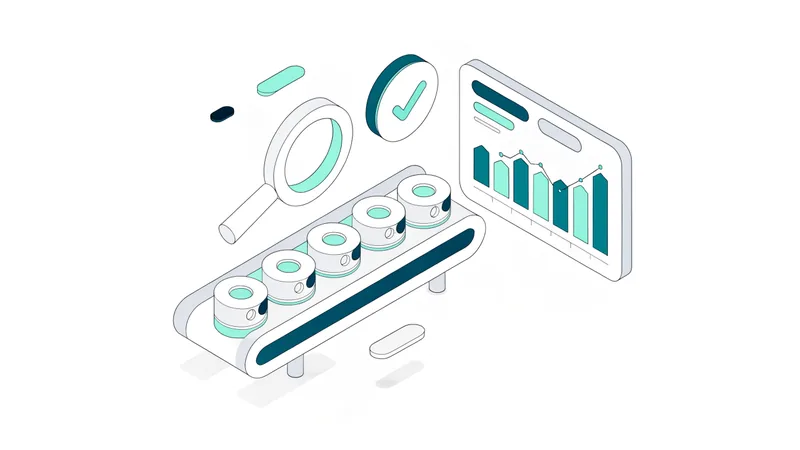
Quality control, or QC, is checking products, services or outputs against a defined standard to find and deal with defects before they reach the customer. It covers inspections, measurements and tests at set points in a process, records the results, and decides what happens to anything that fails, such as rework, rejection or a concession.
In more detail
Quality control and quality assurance are often confused. QC looks at the output and finds defects; quality assurance looks at the process and aims to prevent them, through procedures, training and audits. Most organisations need both: QA to make good work likely, QC to catch what gets through.
Good QC checks are clear about what to check, how, with what equipment, how often, what passes and what to do when something fails. The records matter too, because patterns in the failures show where the process needs fixing.
Example
On a food line, an operator checks the first pack of each batch and then one pack an hour: weight, seal integrity, label and date code. A failed seal stops the line, the batch since the last good check is held, and the failure is recorded as a nonconformance.
Quality control in CheckFlow
In CheckFlow each QC check can be a checklist step with Pass or Fail, the readings in fields and photos as evidence. A fail shows the hold and nonconformance steps through conditional logic, and a schedule can start the checks for each shift or batch.
Manufacturing checklist software
Related terms
Templates with a live demo
Each one opens as a live checklist you can try without signing up.

Run your next process as a checklist.
Build it once as a template, then run it with owners, due dates and a record of every step.
14-day free trial, no credit cardFull refund in your first 30 daysUS hosting, EU on request