What is Value Stream Mapping & How To Create a VSM in 7 Steps

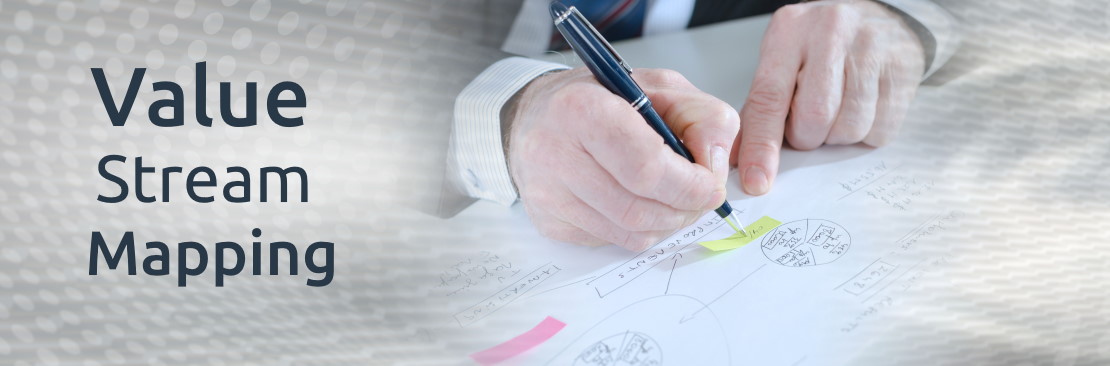
A company that creates products and sells them to customers must map out their entire business process, starting from the product creation stage to the final product delivery. A visualization of these steps is created with something called value stream mapping.
Value stream mapping is a particularly effective business process mapping technique because you can learn more about your business with it. After that, it is easier to find areas of your business process that can be improved or enhanced.
When you look at your values stream map, you should clearly see all the resources that are available to help your company create its products. All the information on your map should flow smoothly from one step to the next.
The Benefits of a Value Stream Map
A value stream map provides an overview of the processes of your business. With this overview, you can review the workflow of these processes and look for areas where waste and inadequacy exist. If there are delays slowing down the process or keeping it from continuing, then you will be able to identify the cause of them.
Value stream mapping is most effective for mapping out manufacturing processes, but you can use the same method in other industries as well.
How to Start
Typically, a business will create one value stream map to outline the company processes overall. If your company provides only one product, then you can get away with having one value stream map.
However, if you sell a variety of different products, then it is better to create an individual value stream map for each product. Start by creating a map of the most valuable product and work your way down the list from there.
You can assemble a small team of leaders from various departments to be in charge of the map creation. Since they understand the functions of their respective departments, they can each make a valuable contribution to the mapping of the processes. Not only that, but they can offer suggestions on how to improve the processes as well.
The team leader should be a senior manager with experience at creating value stream maps. If you don’t have anyone in your organization with this type of experience, then you can hire an outside consultant for assistance.
It is normal to have to make modifications to your map along the way. Since the map is visual, it is easy to recognize when a mistake has been made.
The actual drawing and illustration of the map is easy. If you have drawing skills, then, you can always use the old-fashioned method of a paper and pen. But if you’d rather take the more technological route, then you can use flowchart software or workflow management software.
Flowchart software offers a variety of tools to create business process maps. Workflow management software offers more customized solutions besides the basic mapping features. It also lets you manage and track your business workflows too.
Symbols
Every value stream map uses symbols. They make it easier to visually see all the stages of the processes and workflows. You can take one look at the symbols and understand each step perfectly.
No one expects you to be a master at symbol creation. That is why you can just use premade symbols that are almost universal in every organization. For instance, the usual symbol for “go and see” involves a line with a pair of spectacles. If you see a truck symbol, that means something is transported. Make sense?
The Seven Stages of Value Stream Map Creation
Okay, so you should understand the gist of value stream mapping. Now let’s discuss the seven primary stages of value stream map creation.
1) Plan the Map
Before you create the map, you must determine how much of the business process that you want to cover. You can cover everything from start to finish, but it is not always necessary. Sometimes mapping out the value chain only is better. Knowing about the internal processes may be enough because the external processes are not as important. Just consider the advantages and disadvantages of each.
Most businesses begin their value stream map with the suppliers delivering raw materials to the manufacturing department. Then, at the end of the map, they’ll include the delivery of the end product to customers. Place the starting icon on the left of the map and the ending icon at the right of the map.
If you have sophisticated production processes, then a value stream map for each process might be required. This will give you the chance to add more details to the map in order to explain the process better. However, you should complete the overall value stream map first before creating smaller maps with more details on them.
2) Outline the Steps of the Processes
So, you know what you want to put on your map. Now you must break down the business processes by listing the individual steps for completing them.
For instance, if you own a plant nursery that sells plants to consumers, the first step is for the supplier to send seeds to your business. The final step is to deliver plants to the end users or customers.
3) Information Flows
Information flows are quite beneficial on a value stream map. They show you exactly how each step is achieved. For example, when a company must order raw materials from their supplier, an information flow shows how and when this is done. It gets recorded on the value stream map for the team to see clearly. This is the team that is responsible for completing that particular business process.
Your value stream map will have input blocks and output blocks, which represent the beginning and end of the business process. When you specify a department to work on the process, the department gets added to the middle of those blocks. Underneath the department, you will draw a new block for the weekly plan specifications. Draw arrows from this block to every department on the map that is associated with the process.
4) Collect Important Information
If you’re going to specify more critical information on your visual stream map, then you need to collect this information by digging deeper into each process and examining it carefully. Ask your mapping team for assistance in this task because data collection can be time consuming.
The information you’ll want to collect includes the following:
- Transfer time
- Cycle time for every unit
- Items available for every process
- Quantity of people required per step
- Quantity of products to get thrown away
- Pallet size needed
- Total batch size for every step
5) Create Timelines
After you’ve collected this important data, you can begin adding it to your visual stream map. Below each process block, draw a table to represent your data block. Underneath your data blocks, specify the timeline that was utilized for the processes. The timeline indicates the estimated time required to create products and the real time spent to actually create each unit, including the packing and batching actions.
6) Find and Eliminate Waste
When you’re finished creating your value stream map, your work is not over yet. Now you must look over your map and identify any areas of waste which might be reducing your productivity or profit margin.
The seven main areas where you can find waste include the transportation, inventory, the physical movements of your workers, unnecessary waiting times, over-processing of individual items, overproduction, and constant defects in the items produced.
To reduce waste in these areas, following these tips:
- If you don’t run a transportation business, find ways to reduce material transportation and other things that have to be delivered.
- Don’t create an abundance of inventory. Produce what is needed in order to lower production costs.
- Put your workers in an area where they can work productively without having to move very far.
- If one process is holding up the time for another process to finish, then you must fix the first process and make it work faster.
- Try reducing input so that one process can move onto the next without any too much processing needed.
- Don’t store products and watch them for too long. Lower your level of production.
- If you find that your produced items have constant defects, then try to figure out why so that you can avoid them from happening again.
7) Finish Your Value Stream Map
If you managed to find all the wastes in your process, then proceed to create a value stream map which eliminates the wastes as much as possible. Assemble your team together and have them help you out with this.
It will take more than one step to reach your goal. If you must create several future state maps, then go ahead and do so. Milestones can help you achieve future goals and find more success in your business processes.
Conclusion
It is better to use technology to create your value stream maps. The pen and paper method wastes too much time, especially when you have to send reports back and forth. But if you use advanced workflow management software like CheckFlow, it can greatly speed up these actions and make it easier to manage your business processes.